To Be or Not to Be a European Today!
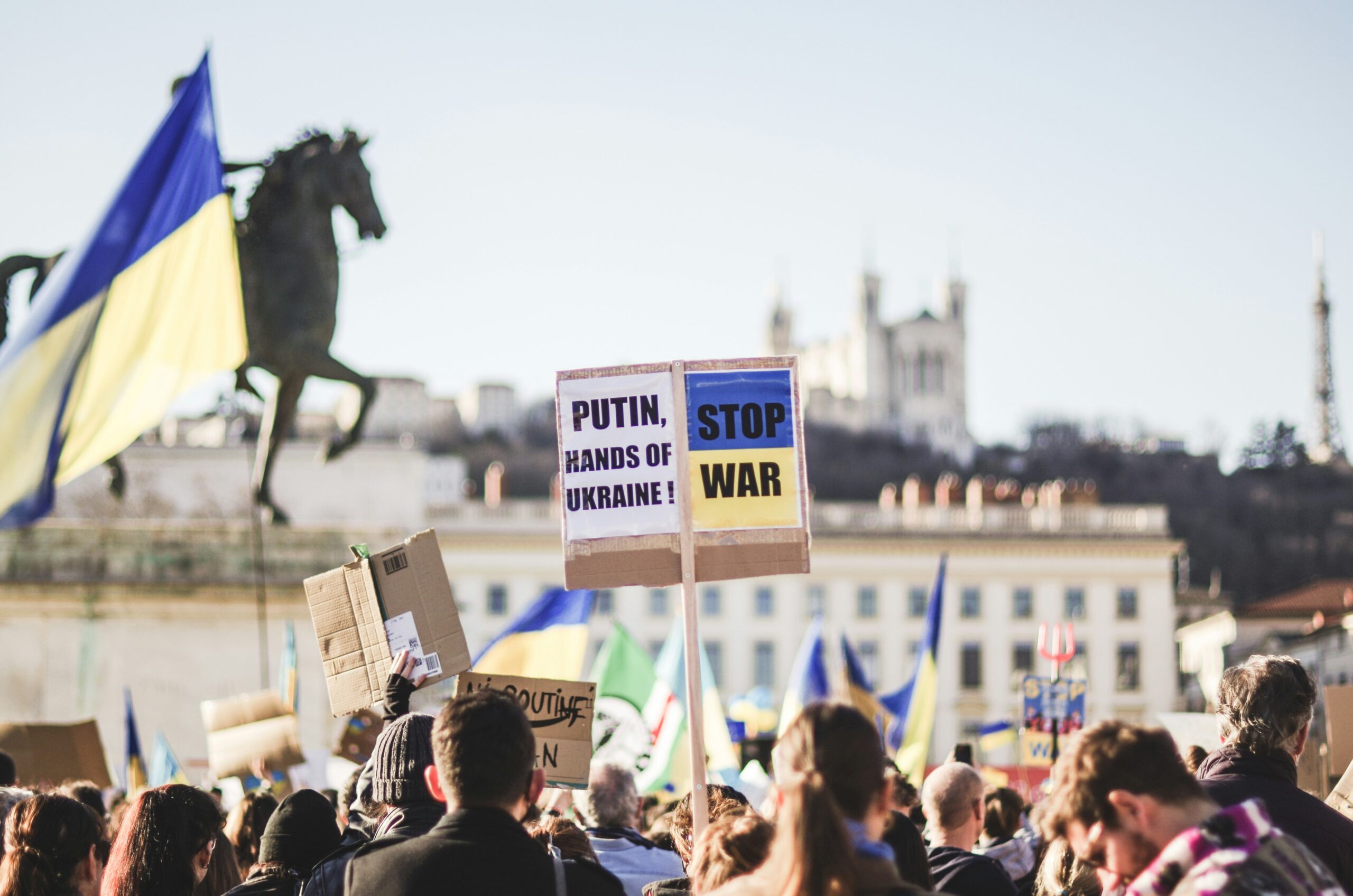
“To be or not to be a European today?” — given the war, this is the question posed to us by Sylvain Lazarus, French anthropologist, political activist, and friend whose two books we have translated[1] into Serbo-Croatian and introduced his work to our public. This difficult question was posed to a group of associates after a summer seminar, more precisely the Dialogue in Beausset, where we met in 2025. The question of the presence of war, particularly the war in Ukraine, the political subject today, and the possibilities of political articulation were the subject of discussion, and this text emerged as a response to the question posed.
I accept the posed question as my own and admit that within it I hear two others: Shakespeare’s—rhetorical—and Lenin’s. More precisely, it is Hamlet, and the question is posed by the character, not the author: “To be or not to be, that is the question,” whereas Lenin’s is not rhetorical, but political, the kind I assume we also need: “What is to be done?” If I translate it into “What is to be?”, it does not necessarily have to be an identity question, as it was during the nineties, immediately before the war in Yugoslavia and prior to the thirty-year prelude to what now seems to us like a world war. For some, it has already begun; for others, it is in preparation, while some deny it. However, if we have a problem with denial (disavowal, Verleugnung), then even the admission that war is in preparation or has begun is not enough for action from which a change in the situation could be expected.
Perhaps that is why we do not ask if there is a war, but if there is a European? Perhaps that is the question demanded by answers to unasked questions, which, following Althusser, we might call symptoms. Thus, the question is on the table, not the answer: To be or not to be a European today?
If we are talking about a symptom, there are plenty of them, and together they form a syndrome. Here is how I would break it down:
1 – Europe consists of member states, nation-states, and sometimes it seems they insist more on their national interests and populistically cater to their citizens who, under conditions of war, would rather cease to be Europeans. In other words, in conditions of war (war as that which sets conditions, and the setting of conditions as war—conditioning as war), it is as if Europe is left without Europeans. The European community is also made up of member states where the prevailing winds are policies of populist sovereignty and nationalism, encouraging the peoples they hold together to stop being Europeans.
Serbia is not in the EU, but it is a country in the process of stabilisation and association, yet the majority mood is anti-European. Military neutrality as the geostrategic choice of the authorities in Serbia is merely a justification for its unsuccessful diplomacy of “constructive ambiguity” and a very effective internal policy of destructive ambiguity. Although traditional pro-Russian sentiment does not find reception among the new generation, the European support for Vučić to date has alienated young people from Europe as well.
The question of citizenship, of the citizen of Europe, of the European as a citizen, is fading into the past. With it, the question of democracy becomes misplaced.
2 – Since the nineties, the question of identity is no longer just a cultural category, but a security one. The Yugoslav nations demonstrated this with a war in which the question of national and religious identity was a question of life and death, ethnic cleansing, and genocide. The question of European identity and values began to acquire security significance from the “War on Terror,” and now it is on the threshold of something that Ukrainians and Russians are extensively testing for the entire European space: to be a European means to be an enemy of Russia. The question of citizenship, of the citizen of Europe, of the European as a citizen, is fading into the past. With it, the question of democracy becomes misplaced. Security in a military and social sense replaces the question of equality, and freedom becomes a category that points toward war. The state ceases to be a state of citizens; citizens become members of a nation expecting care, protection, and safety.
3 – Economic sanctions against Russia and the interruption of “normal” life supply discourage the inhabitants of European states and deter them from European political responsibility, to which Putin’s “hybrid bombs” must now be added. The question arises: is the Ukrainian border a red line for Europeans outside Ukraine as well? What about air lines—what color are they? Drone overflights of continental Europe “deep in the rear” with the aim of intimidation and provocation treat all citizens of European states as Europeans, including those who are for EXIT politics. However, what if Ukraine is the Donbas of Europe?
4 – The “Collective West” has disintegrated into the USA and Europe since Trump re-entered the White House. His threats of withdrawing from the NATO alliance make Europe solely responsible for the “threats” due to which the “endangered” Putin “had to” intervene in Ukraine. Now, together, they are building a narrative about the militaristic policy of Europe, turning it into an irresponsible political player and the sole enemy of Russia, and in the final instance of this terrorist and mafia-like “policy,” Europeans are responsible because they continue to support governments that are in favor of remaining in the EU. There is an opinion among Russian analysts that even if Ukraine is defeated, if Europe remains united after the war, it is a more difficult situation for Russia than when America was involved. (Sergey Karaganov, Dmitri Trenin)
*
Disavowal. There is no adequate translation in my language. “Verleugnung” implies a problem that you accept as insoluble. As a state of situation you cannot change, and the shituation is unprecedented. Inadmissible shit that you do not admit. But it is not up to you; you are clear on that.
Awareness that it is war, the admission that it is war, the insight that it is war, does not mean that we are ready to do something about it.
However, what do we deny when we refuse war? Is it similar to refusing the fact that climate change exists and that ecological catastrophe is inevitable? Refusing war implies denial—but what is being denied? I would say what is denied is that relations of production are relations of power. Marx said in Das Kapital that capitalists initially knew very well what they were doing, but that later, the transformed form of value in the guise of profit made them forget the cynical founding gesture of the knights of industry. That metaphor is a symptom that leads us to look for the sword, while it escapes us that the knights of industry remain knights even when they are not knights of the sword. Production relations as relations of power by which ownership—real ownership—is established make the accumulation of capital eternally primitive. Aneignung (appropriation) can be left to another, even to the whole of society—socialism and social ownership had their own non-worker who disposed of real ownership and the power of appropriation (Aneignung), that is, initiating the production process by determining what, how, and for whom.
There is no other European except the one who is a Ukrainian today.
Awareness that it is war, the admission that it is war, the insight that it is war, does not mean that we are ready to do something about it. My mode of denial is the belief that it is about criminals and vulgar thugs, even a conspiracy of two or a few bandits creating an opportunity for profit and conditions to remain in power, since this guarantees impunity. Criminalization or incrimination of the authorities is my way of answering my old and perhaps never-concluded question of the relationship between structure and practice.
Ukrainian exclusivity confuses many—the commitment to Ukraine is the only possible choice; there is no alternative. Everything else is crossing over to Putin’s side, from whatever distance one thinks and speaks.
Althusser again: when he said in his text for the collection Reading Capital that the concept of history does not hide in beds, thereby pointing to the significance of Marx’s discovery of the theory of history (“Historical Materialism,” of which “Critique of Political Economy” is only one regional discipline), as a reader, I thought that the concept of beds does not hide in beds either. Lacan offers his argument for this (To love, Napoleon had to call his mistress Josephine, after his brother.), and Thomas Carlyle with his philosophy of history and “Great Man Theory” has his own. But what about the “theory of small/little or ordinary men,” the theory of Ukrainians? Ukrainians-Europeans? Ukrainian exclusivity confuses many—the commitment to Ukraine is the only possible choice; there is no alternative. Everything else is crossing over to Putin’s side, from whatever distance one thinks and speaks. There is no other European except the one who is a Ukrainian today. I think this can be heard in every contact with them, in every statement that reaches the point of decision. But can the Ukrainian decide for us?
Reference:
[1] Sylvain Lazarus, Anthropology of the Name, 2014, GKP&kuda.org and Chronologies of the Present with Claire Nioche, 2020, GKP.
—