Local journalists from Italy: A call to shift perspective
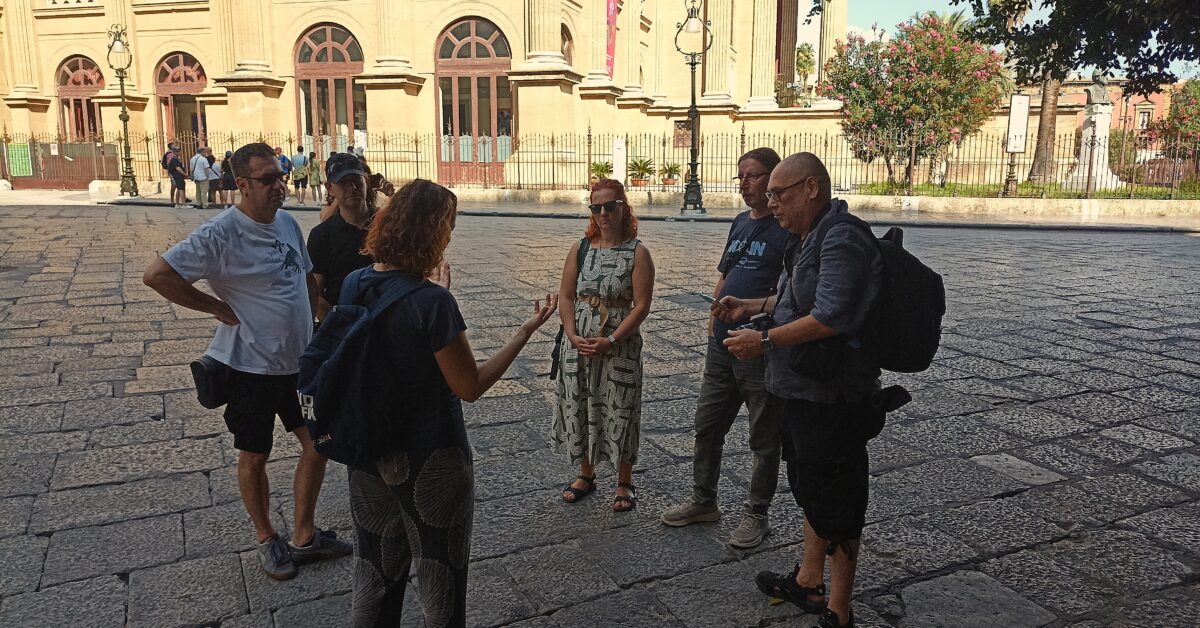
“We try to work on the de-escalation of public discourse and to point out the complexity of things themselves.” This is how Andrea Degl’Innocenti and Daniela Bartolini—two of a dozen Italian journalists reporting on local civic initiatives—described part of the mission of the Italia che Cambia association. They believe that while polarization in the public sphere is unavoidable today and that taking a side is inevitable, it has also become a stereotype in Italian political reporting. What they clearly see is an ongoing polarization of ideas which, ultimately, leads to deepening divisions among people and the rise of extremism.
Social and political polarization emerges as one of the key concepts, and there is a form of consensus that, despite all the differences, it is precisely this that today defines the context of journalistic work both in Serbia and in Italy.
The presentation of practices by journalists from Italy took place as part of a knowledge and experience exchange with their colleagues from Serbia and the project “Change Comes from the Community Media.” The journalistic collective Italia che Cambia, together with GKP, is a partner in this project and was invited to present its work and the context in which it operates, also in light of the experiences of local journalists from Serbia who work in a deeply divided society.
In both cases, social and political polarization emerges as one of the key concepts, and there is a form of consensus that, despite all the differences, it is precisely this that today defines the context of journalistic work both in Serbia and in Italy — and, we believe, more broadly. At the same time, however, the question can be raised as to how large the difference between these two contexts actually is.
Serbia is a country in which human rights, the right to information, and institutional transparency are severely threatened, and whose EU accession process has come to a near standstill. Although a member of the EU, Italy has been rated as one of the “dismantlers” — that is, one of the countries in which the erosion of the rule of law gives cause for concern, according to the Liberties Rule of Law Report 2026 by the civil society network Civil Liberties Union for Europe. While in Serbia the current authorities are pursuing the criminalization of the student movement and open violence against citizens and journalists is intensifying, this same report indicates that Italy is introducing reforms that enable discrimination against minorities and migrants, as well as violent repression of protesters.
Moreover, since June 2025, Italy has had in force a so-called Security Bill that bans road blockades during protests and under which dozens of demonstrators have been arrested. And it is precisely road blockades that have been one of the most significant actions organized during the student and civic protests in Serbia since November 2024 — protests demanding government accountability for the tragedy at the Novi Sad railway station and the deaths of 16 citizens. A similar law that would legally criminalize protests does not (yet) exist in Serbia. However, outright physical violence against demonstrators during blockades is carried out by the authorities and members of the ruling Serbian Progressive Party (SNS) even without a legal framework that would justify it.
This comparison speaks to undemocratic tendencies both in EU member states and in those undergoing the accession process. And by all accounts, the rise in repression against citizens who resist these tendencies, and the violation of their rights, is equally characteristic of all of them, including these two countries. What does this mean for the work and safety of journalists in such environments, and for the ethical principles of the journalistic profession that they strive to uphold? In environments where even attacks on journalists are no longer a rarity.
In Serbia, during March 2026 alone, there were 186 verbal attacks on journalists according to a report by the Slavko Ćuruvija Foundation, while during the previous year there were 208 incidents involving not only verbal but also physical attacks (Media Freedom Rapid Response). And according to the aforementioned Liberties report, in 2025, journalists in Italy were targeted by various forms of legal and physical attacks, as well as smear campaigns by political figures, with the aim of silencing criticism. Moreover, a new and troubling issue has emerged regarding the use of spyware and surveillance directed at journalistic work, posing a serious risk to media freedom and journalist safety.
According to data[1] presented by journalists from Italia che Cambia, 43.08% of attacks against journalists come from “people and associations”, followed by 28.46% from public institutions and political representatives, 15.42% from unknown actors, 7.77% from entrepreneurs, 2.24% from media actors and 3.03% from mafias and criminal environment.
Given this context, Andrea noted that it is “difficult to navigate between objectivity and ‘cheering’ in a complex systemic chaos,” where “cheering” refers to the undesirable side of reporting on local civic initiatives. This is a self-reflective practice that these journalists resort to in their work and in an increasingly polarized environment. Despite the almost equally significant systemic “chaos” in Italy, they insist on a shift in perspective within their own work.
The Role of Journalists in Reporting on Civil Society
Journalists from Italia che Cambia are very much aware that they live on the boundary between journalism and activism. Precisely within the outlined context, and as we observed during the exchange between Serbian and Italian journalists, the combining of these two positions is not symmetrical. What does this mean? It is often the case that activists report on their own actions and in doing so become journalists. However, a journalist who adheres to their profession and its code of ethics less frequently becomes an activist — unless the authorities, by amplifying polarization in society and undermining the public interest, effectively make one of them: when they decide to treat journalists as enemies and characterize their advocacy of the public interest as partisan. To resist this, it is necessary to maintain a distance — and this too was a topic addressed by our colleagues from Italy.
In keeping with the mission and the very name of the association Italia che Cambia (Italy is Changing), the question was raised as to what is needed in order to report on civic initiatives that bring change “from below.” In Andrea’s words, “it is necessary to maintain a balance in which passion and empathy must not cross over into cheering.”
He believes that empathy is extremely important because through it we can establish a connection with people and their stories, and that passion is needed to convey this to others, as well as to survive — since this kind of work is often existentially precarious. However, it frequently happens that these two aspects — empathy and passion — become so intertwined that it turns into a problem, one that can make a journalist biased and potentially reckless. That is why, in his words, it is essential to maintain distance in order to be able to report.
When meeting with people, they emphasize “that they are not promoters of their initiatives,” but rather that their task is to convey them to the public in all their complexity, with a degree of criticism.
Reflecting on their own practice, which they most commonly refer to as “constructive journalism,” they also turned to the topic of “solution journalism” — that is, journalism focused on solutions, which represents in-depth reporting on responses to social problems. It investigates and explains how people attempt to address these problems, which in itself deserves to become news. Journalists from Italia che Cambia believe that it is a great challenge to respect all the principles of this type of journalism and to be rigorous in applying them. They themselves acknowledge, in a sense, that in the beginning they were “cheerers” when encountering people who throw themselves wholeheartedly into their initiatives. They therefore raise the question of how it is important to convey criticism as well, “without it being painful.” In their words, it is important to be reliable and trustworthy as a journalist. When meeting with people, they emphasize “that they are not promoters of their initiatives,” but rather that their task is to convey them to the public in all their complexity, with a degree of criticism of flawed approaches so that these are not replicated.
“During interviews we prepare the ground with them, a clear alliance is established in the course of the interview — that the journalist is not their PR person and that they should not expect us to be their promoters,” Daniela confirms. Andrea adds to this that there were cases they chose not to write about because the initiatives were too personal, insufficiently constructive, or had a flawed initial premise; that some asked for criticisms to be withdrawn, but that they ultimately found an angle from which it was possible to read the criticism in a constructive way.
Lupus out of fabula
Journalists from Italy also provided a timely example. Specifically, the wolves have naturally recolonised several areas of Italy. Given the particular context in which, for right-wing circles, this represents a call to hunting — a widely popular sport in Italy — but also an opportunity to instill fear among citizens, these journalists decided to interview hunters as well. Their work primarily involved interviews with livestock farmers as those most directly affected by this development. Through this example, they pointed out that on important social issues they strive to capture viewpoints different from their own in order to convey the complexity of the situation.
However, as they stated, conveying the complexity of the situation for them did not include interviewing politicians, who most often have nothing meaningful to say when it comes to issues of this kind — even though such interviews might ostensibly contribute to illuminating and depicting the complexity of a social phenomenon. This is an interesting observation that speaks to the fact that a focus on politicians’ statements, which are frequently instrumentalized or instrumentalizing, does not necessarily have to be the guiding principle of journalistic work. Rather, a more sensitive approach would mean focusing on a specific problem or phenomenon and handling it carefully in order to bring it to the public as a matter of relevance. In other words, one might say that it is possible for “the wolves of politics” to be left out — to remain outside many stories — and for journalistic work to remain credible and socially enlightening, serving the public interest.
A Shift in Perspective
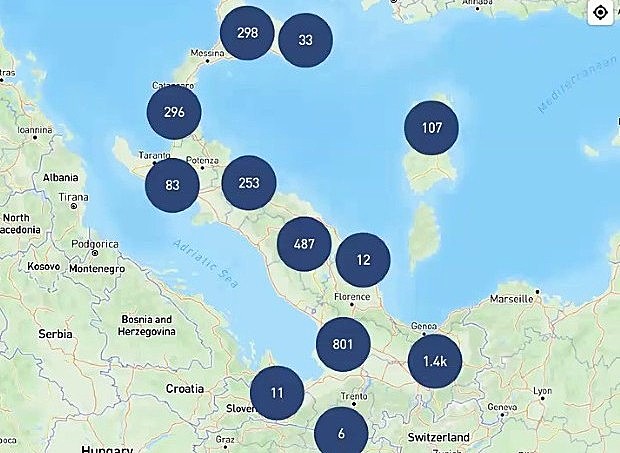
In addition to these values being visible in the articles written by the Italian journalists and recognizable in their speech, they are also present at the visual level of their work. Specifically, the Italia che Cambia website features a map of Italy with thousands of local initiatives that they have researched and reported on as part of their work. But there is something unusual about this map — it is displayed upside down. The tip of the “boot” is placed at the top of the map.
“This is our invitation to shift the perspective through which we look at things.”
In Andrea’s words, this visual representation can be read in multiple ways, and for him it manifests their work on changing the imaginary by dismantling stereotypes about southern Italy, as well as the stereotype of the north in relation to the south. “Turning the map upside down was not unconscious, because our imaginary is hierarchical: heaven is above, hell is below,” he adds, explaining that they wanted to highlight the paradox and their stance “against the stereotypes of how the south is perceived — the global south” — as underdeveloped and therefore less significant. “This is our invitation to shift the perspective through which we look at things,” Daniela confirmed.

But beyond the visual invitation to shift perspective, there is something else interesting in the work of this network of local journalists in Italy. That is the introduction of a global perspective into their primarily local work. What does this mean, and how is it possible to reconcile the two? The audio podcast “Io non mi rassegno” (“I Won’t Give Up”) serves as a bridge between local stories and the broader global context. Drawing on the well-known motto “act locally, think globally,” through this format they strive to explain how local events — for example, flooding and landslides in Sicily — are directly connected to global phenomena such as climate change.
“Local initiatives in some way mirror values that are not exclusively local,” Andrea notes, adding that “in the historical moment we find ourselves in, in terms of geopolitics, it is important to see how global events affect life at the local level (for instance, fuel prices).” In his view, these two dimensions are fully interconnected, as we ourselves increasingly ask what effects, say, local elections in a given country will have on global policies.
At the core of this approach is the idea of clarifying the connections that exist between the local and the global, and what the consequences and repercussions are for the local level — as is the case with the ongoing war involving Iran. In fact, this represents the intersection of complexity that they advocate for, rather than just the individual stories they published at the beginning of their work. From their perspective, it was necessary to follow the movements and trends that influence the vision of the country they stand for.
Anti-mafia 2.0
Through their work, these journalists are also changing the way the mafia in Italy is perceived — not only by tracking its transformation, but above all by reporting on the people who fight against it. As previously mentioned in the overview of the types of attacks on journalists in this country, a very small percentage of those attacks come from the mafia. There is a reason for this: the mafia has changed significantly over the past forty years. In fact, as Andrea notes, “the mafias have changed. They are less visible in terms of street violence, because they have integrated themselves into the economic fabric of the country. They have not disappeared when it comes to territorial control, but they have entered businesses through corruption, money laundering, and public tenders — primarily in northern Italy.”
Changes in relation to the mafia have also come about because of civic initiatives that are paradigmatic, as their very existence has overturned the imaginary through which we today perceive the mafia.
In the words of these journalists, the mafias remain deeply rooted in their territories, but have spread throughout Italy and Europe by becoming financial organizations and companies. What they see as a great danger is the mafias’ ability to weave themselves into the legitimate economic flows of the state. And they do so quietly in order to stay below the radar of the public and journalists — and since they have no interest in being visible, their threats only materialize when journalists touch on specific financial and economic interests of what is today an almost “civilized” mafia.
Changes in relation to the mafia have also come about because of civic initiatives that are paradigmatic, as their very existence has overturned the imaginary through which we today perceive the mafia. One of these initiatives, Addiopizzo, was launched by students during a nighttime action in Palermo, when they put up stickers bearing the message: “An entire people that pays an extortion racket is a people without dignity.” In Andrea’s words, this is highly significant because at the foundation of the mafia in Sicily lies the concept of honor — and this redefines what honor means, or rather, what dignity means. “It is on the side of the people who have rebelled, and no longer on the side of the mafia,” Andrea adds.
The initiative grew into an association and invited people to stand up against mafia extortion, to report racketeering, and to display these stickers on their premises. There were mafia reprisals against this action — they burned down shops — but in such cases all members of the network contribute funds to have them rebuilt. Putting up a sticker is also meaningful for ordinary citizens, as they prefer to go to mafia-free establishments rather than those that pay the racket.
Another important initiative that has overturned the imaginary in relation to the mafia is the GOEL cooperative in Calabria. This cooperative creates new jobs in order to make people independent from the ‘Ndrangheta — the mafia that, prior to the emergence of this initiative, was the only employer in the area, which made it extremely powerful. The impact of these initiatives on the territories where the mafia had operated was significant, and these journalists believe that this is precisely one of the reasons why it has retreated into entrepreneurship.
As they explained, this type of local organizing and action — also known as Anti-mafia 2.0 — is responsible for changing both the methods of resistance and the overall imaginary surrounding the mafia in Italy. And it is, at the same time, difficult for the mafia to counter. As Andrea noted, in an intercepted phone conversation that was made public, a mafia boss ordered that the shops of those who refuse to pay the racker should not be burned down, “because it will backfire on him.” This way of organizing against the mafia is new compared to previous struggles against it. “Back then, by killing prominent individuals who acted against the mafia, their ideas were killed along with them,” Andrea added. However, Anti-mafia 2.0 “is a faceless network — the mafia has no visible enemy in a single individual, and is therefore less powerful,” Andrea explained.
As Daniela concluded, their organization, Italia che Cambia, is actually governed by two entities — a cooperative and an association. Their cooperative is part of a confederation of cooperatives headquartered in Catania, Sicily, and at the top of the confederation strict care is taken to ensure that its work does not fall under the influence of the mafia. So, beyond their in-depth reporting on these initiatives, the Anti-mafia 2.0 principle has been embraced and extends to the level of the organization itself and to the way this network of journalists in Italy operates.
[1] “Ossigeno per l’informazione”, 2025 report.
—
Cover photo: Screenshot of the Map of Civic Initiatives, source: Italia che Cambia
This text was produced during the Digital Seminar — an activity within the Erasmus+ adult education cooperation project entitled Change Comes from Community Media, led by the Group for Conceptual Politics in partnership with the journalist network Italia che Cambia.


Disclaimer: Funded by the European Union. The views and opinions expressed are those of the authors and do not necessarily reflect those of the European Union or the National Agency (grantor of the dedicated grant), the Tempus Foundation from Belgrade. Neither the European Union nor the National Agency can be held responsible for them.