To be or not to be a European today?
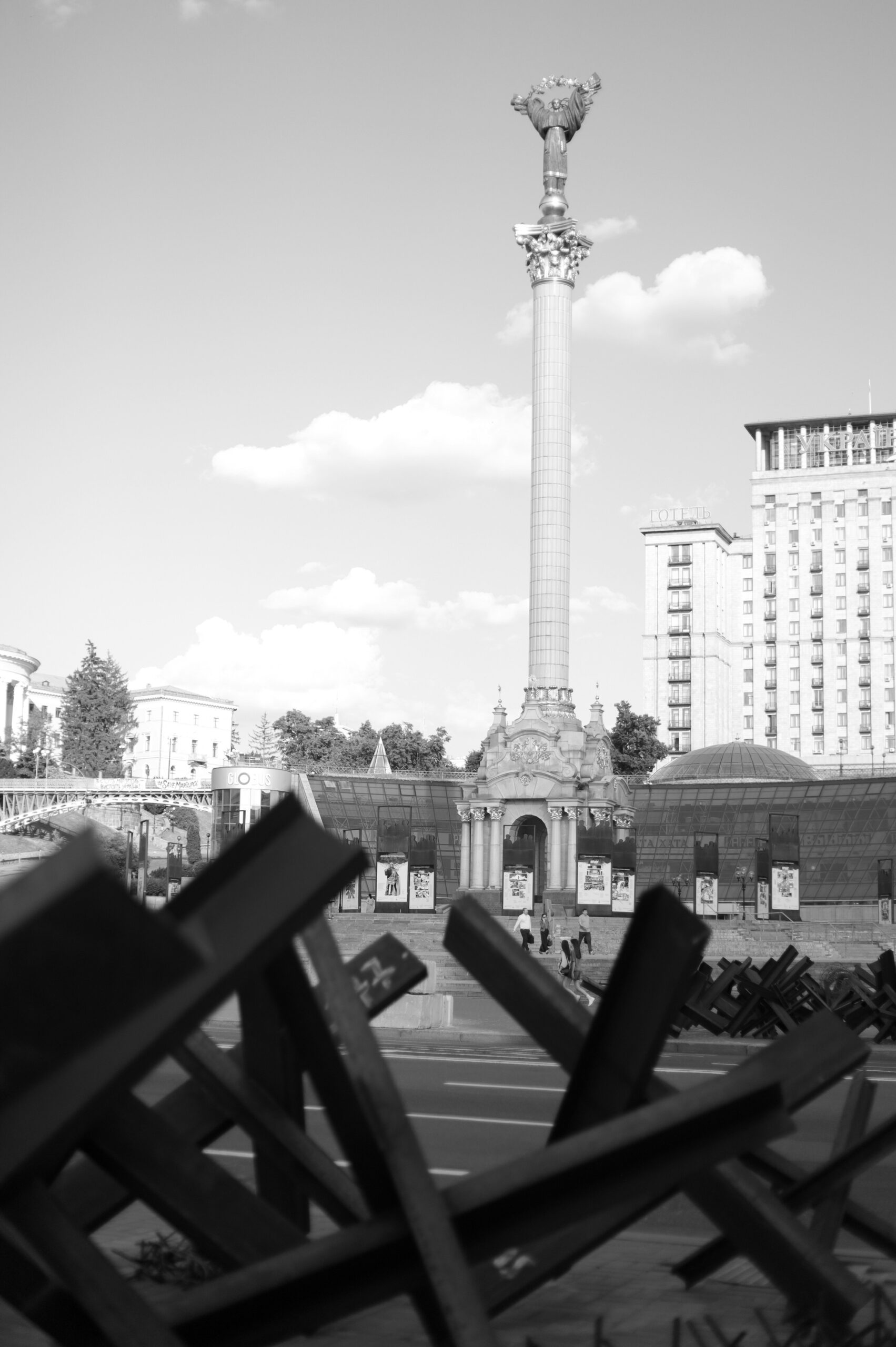
“To be or not to be a European today?” — given the war, this is the question posed to us by Sylvain Lazarus, French anthropologist, political activist, and friend whose two books we have translated[1] into Serbo-Croatian and introduced his work to our public. This difficult question was posed to a group of associates after a summer seminar, more precisely the Dialogue in Beausset, where we met in 2025. The question of the presence of war, particularly the war in Ukraine, the political subject today, and the possibilities of political articulation were the subject of discussion, and this text emerged as a response to the question posed.
“To be or not to be a European today?” — in a time of war, this is a difficult question and sounds almost fateful. If I were to expand it to read: “Whether to be or not to be a European today?”, it does not merely pose a question, but opens up the possibility of choice and decision. Can we also speak of a potential, that is, a possible? Would that be a possible for people today, given the category of European? And since we are speaking of a time of war, it would then mean deciding — or not — for being a European in that context. Would that, being or not being a European, mean deciding for war or against it? And would deciding against war mean deciding for peace? In other words, does deciding to be a European mean choosing war, and deciding not to be a European mean choosing peace?
It seems that this matter is neither symmetrical nor straightforward. For what these “equations” lack is the position of power and states today, in a time of war, and then also the relations that people take toward them. Although I believe the question of the European today concerns people, I will take into consideration for a moment the authorities of European countries and their relation to the war. The dividing line is drawn between those governments that choose to support Ukraine and are quite clearly against Putin’s war policy, and those who, by maintaining ties with Russia, support or at least do not condemn Russian aggression, even though they may claim to simultaneously support the Ukrainian struggle. More on this later — and an obvious example of the latter position is Serbia, which, despite all EU pressure, refuses to condemn Putin’s war policy while simultaneously selling weapons to Ukraine. Or Orbán, who has declared that he alone is pursuing a peace policy in Europe (for now just a note that both states depend to a high degree, or entirely, on Russian energy resources).
“Ukraine must win, and Russia must not lose.”
I pose the question: do the governments that support Ukraine actually support war — the defensive war of the Ukrainians and an indecisively-victorious war when it comes to their support — and are they therefore European? And those European governments that are declaratively for peace actually support war as well, but Putin’s war of aggression, and are therefore not European. If we look at the level of power, it is clear that there is no consensus or unified meaning around being a European or not — even if in this case the defining criterion for being a European were membership in (or accession to) the European Union — just as there is no open and agreed policy among states on the question of the war in Ukraine. And it is precisely the taking of a stance toward the war in Ukraine that is essential and perhaps even decisive when it comes to the answer to our question. However, from one EU official we could hear the statement that “Ukraine must win, and Russia must not lose,” which is an obvious example of an indecisively-victorious war and, at the very least, of an ambiguous position toward the war in Ukraine. At issue here is not only the general view that in war there are no winners and that in fact everyone loses, but also the ambiguous and, above all, irresolute position of Europe toward Russia. Is the basis of that irresolution its fear of Russia?
So, are the officials of European countries “Europeans or not” — in the sense of whether they are for war or for peace? Most of them send weapons to Ukraine, from which they expect victory in the war and the establishment of peace. They are, therefore, indirectly for peace, just as they are for war — as stated, defensive and indecisively-victorious — or, alternatively, for Putin’s war. In their case, these two categories — war and peace — are completely bound together, indistinguishable, and practically cancel each other out in their non-differentiation. Thus, from the standpoint of authorities and states, peace continues to remain part of the politics of war: Orbán until recently, Fico, Babiš, Vučić speak of being on the side of peace while, out of their own internal interests, supporting Putin’s aggression. Peace on the side of the authorities is the politics of war, because the ostensible advocacy for peace is merely their way of confronting the states that support the Ukrainian defensive struggle in the way they support it, and who oppose Putin.
*
What follows is Michel Foucault as inspiration, in order to approach the position of people in relation to authority — that is, the position of the possible within the question of “to be or not to be a European today.”
“We are thinking beings. That means that even when we kill or when we are killed, even when we make war or when we ask for support as unemployed, even when we vote for or against a government that cuts social security expenses and increases defense spending, even in these cases, we are thinking beings, and we do these things not only on the ground of universal rules of behavior but also on the specific ground of a historical rationality.”[2]
Foucault examined this rationality from a historical standpoint, in order to arrive at modern political rationality, through the example of the idea of “reason of state” and the particular meaning of “police” in the 17th and 18th centuries. He also said something important about the Second World War in the text “The Political Technology of Individuals” — that it was a slaughter, a slaughter during which programs of social and medical assistance and public health were simultaneously launched, programs that continued to exist after the war. He even cited the slogan: “Go get slaughtered and we promise you a long and pleasant life. Life insurance is connected to a death command.” According to him, the coexistence of political structures or great destructive mechanisms, and institutions oriented toward the care of individual life, constitutes a puzzle he sought to explore, along with the techniques of governance associated with them.
However, today’s war is not the Second World War. Governments do not send citizens to war (it is the aggressors — Russia and Israel — who do that), but rather weapons, nor do they any longer guarantee social care for everyone. Neither a world war, nor compensation through social care. Where do we find ourselves? Certainly, in an entirely different historical moment, in a present marked by war, but simultaneously also by the end of social care. European countries are increasing public defense budgets, sending no one to war, nor promising a long and pleasant life. Following Foucault, we are witnessing the existence of destructive mechanisms, but also the disappearance of institutions oriented toward the care of each individual.
In Serbia, being a European is not something people choose, less so because of the war, and more so because of the absence of the kind of response from the European Union that they would want to the violence of the Serbian authorities against them.
But what is happening on the subjective level, from the perspective of people? People are against war and want peace, which they equate with social care, demanding their rights from their governments — rights grounded in state belonging (in citizenship). When it comes to war, what we can hear from people is that Europe is a militarized formation and European politics is politics of war. The pacifism that people opt for now turns against the “warmongering” policy of the West, and above all of Europe, toward which an increasing number of people hold a negative attitude (an attitude further reinforced, for instance, by ecological struggles resisting the mining of lithium in Serbia, which Europe desperately needs as part of the automotive and defense industry). In Serbia, being a European is not something people choose, less so because of the war, and more so because of the absence of the kind of response from the European Union that they would want to the violence of the Serbian authorities against them.
People may also be against Putin, but in this they do not necessarily see an affirmation of the defensive war waged by Ukrainians defending their country against Russian aggression. So, neither Putin nor the Ukrainians. At issue is, at the very least, the invisibility and opacity of the war for them in terms of the act of confronting it. By demanding peace — but in reality, social care — they exclusively link war to the policies of their governments, which they consider militarized and committed to war. They no longer associate the category of peace with war, but with their own personal needs, nationally bounded. Thus, for people, the categories of war and peace are separated, and due to the illegibility of war, the category of peace is entirely displaced from this pair and assigned something altogether different.
Does the question “to be or not to be a European today” actually pose the question of the inscription of the political subject into the state? Does “not being a European” mean being a citizen of a national state and demanding autonomous decision-making within the framework of one’s country’s constitution, regardless of — or precisely despite — belonging to the European formation? We have heard students in Serbia say that their movement is sovereigntist, and the Serbian authorities claim the same, as do the enumerated European populists. They claim this out of dissatisfaction with the policy of the European Union, which allegedly prevents them from thinking and expressing themselves freely — that is, from deciding nationally and sovereignly — and in fact does not allow them to “sit on two chairs” by demanding that they take a position against Putin’s war. It turns out that people and the authorities want the same thing: at least in Serbia, the authorities do not openly take sides in the conflict, nor do the rebellious students and others currently engaged. They speak of decision-making procedures, of democracy and their rights — but not of confronting the politics of war.
But what would “being a European” mean today from the perspective of — and for — people? To stand with one’s government that supports the Ukrainian defensive war, in a manner that is indecisively-victorious? However, people are largely opposed to the authorities when it comes to their war-related politics, demanding social care and living standards, as well as security in the face of Russian threats. Sabotage and the incursion of Russian drones into the territories of EU countries not only prompts the authorities to increase security measures, but also causes people to fear Russia and the escalation of war that might follow. Fear of Russia appears to be present in both people and authorities alike.
With Russia’s attack on Ukraine, it is Europeans who have been attacked — not Europe or the European Union. Does “being a European” today then mean being Ukrainian?
But does “being a European” today hold meaning for people in Ukraine who are participating in the defensive war against Russian aggression and seeking European protection? Since the beginning of the war, Ukrainians have placed their trust in the European Union and expressed their desire for Ukraine to become a member. So, Ukrainians want to be Europeans. For Putin and his supporters, the war was started by the “West” — which has since been reduced to Europe — when in fact it was Ukraine that was attacked. This is Putin’s lie, because he is not defending himself against Europe and has not attacked it; he has attacked Ukraine. In other words, with Russia’s attack on Ukraine, it is Europeans who have been attacked — not Europe or the European Union. Does “being a European” today then mean being Ukrainian? Being a European means being Ukrainian, and being Ukrainian means being a European — the two positions meet.
In light of Russia’s war provocations toward EU countries, Macron stated that “Russia is currently waging a strategic confrontation against Europeans.” Not against European states, then, but against Europeans. What strikes me is the realization that we are saying the same thing as our governments. If that is so, what is then to be done with that?
*
Regarding the answer to the question “to be or not to be a European today,” I find inspiration for further reflection in the lectures on the political subject[3]. In them it was said that “the state does not have a monopoly on the performance of tasks,” while the war waged by the Ukrainian state is registered and the war waged by Ukrainians in “private” mobilization. If today everyone — if the political subject is inscribed in the state and socially bounded — it is necessary for each person individually to pose the question both of their state inscription and of the space for decision-making and for subjective practices specific to their own “account.” As was said, at issue is “a dispositif that articulates the relation to the question of the state and the relation to the question of personal decision in the name of one’s own values.” Finally, it was said that “there exists a possible of people’s own participation in state tasks. In relative autonomy and in an explicit relation to [it].”
In a word, within the position of “being a European” today, in war, one possible proposal would be that in relation to the explicit inscription in the state, which today also means resisting its politics when it is seen as a politics of war rather than of social care, and agreeing with it when it is promoted as a politics of peace — the space of intervention in the state, of possible own participation, be opened or expanded. An important addition is that inscription does not denote a form of subjugation that is endured in relation to the state space. It concerns rather the calling into question of the positioning of each person in relation to power and government. Is the trajectory toward this an openness to the “private” mobilization of Ukrainians, to the personal decision that each Ukrainian volunteer made for themselves? That is, toward personal values in which the values of the other can be recognized — values that do not reduce to the monopoly of power. For the existence of the “private” mobilization of Ukrainians is simultaneously participation in the war alongside the state and participation in the war in one’s own mobilization.
What would this mean for us today, and is people’s intervention in the monopoly of power with regard to the question of war something that would be possible?
References:
[1] Sylvain Lazarus, Anthropology of the Name, 2014, GKP&kuda.org and Chronologies of the Present with Claire Nioche, 2020, GKP.
[2] Michel Foucault, „The Political Technology of Indovoduals“, translation to English: Robert Hurley, first published in: Technologies of the Self: A Seminar with Michel Foucault, 1988, The University of Massachusetts Press
[3] Sylvain Lazarus: The Political Subject, Chronologies of the Present, 2 — A new cycle of lectures prepared by Sylvain Lazarus, Claire Nioche and Yann Mouton: https://biltenstanar.rs/video-stanar/sylvain-lazarus-politicki-subjekt/
Photo by Viktoriia Filipchenko on Unsplash