The Fight of People Against the Mafia – The (In)comparable Experience of Italy and Serbia
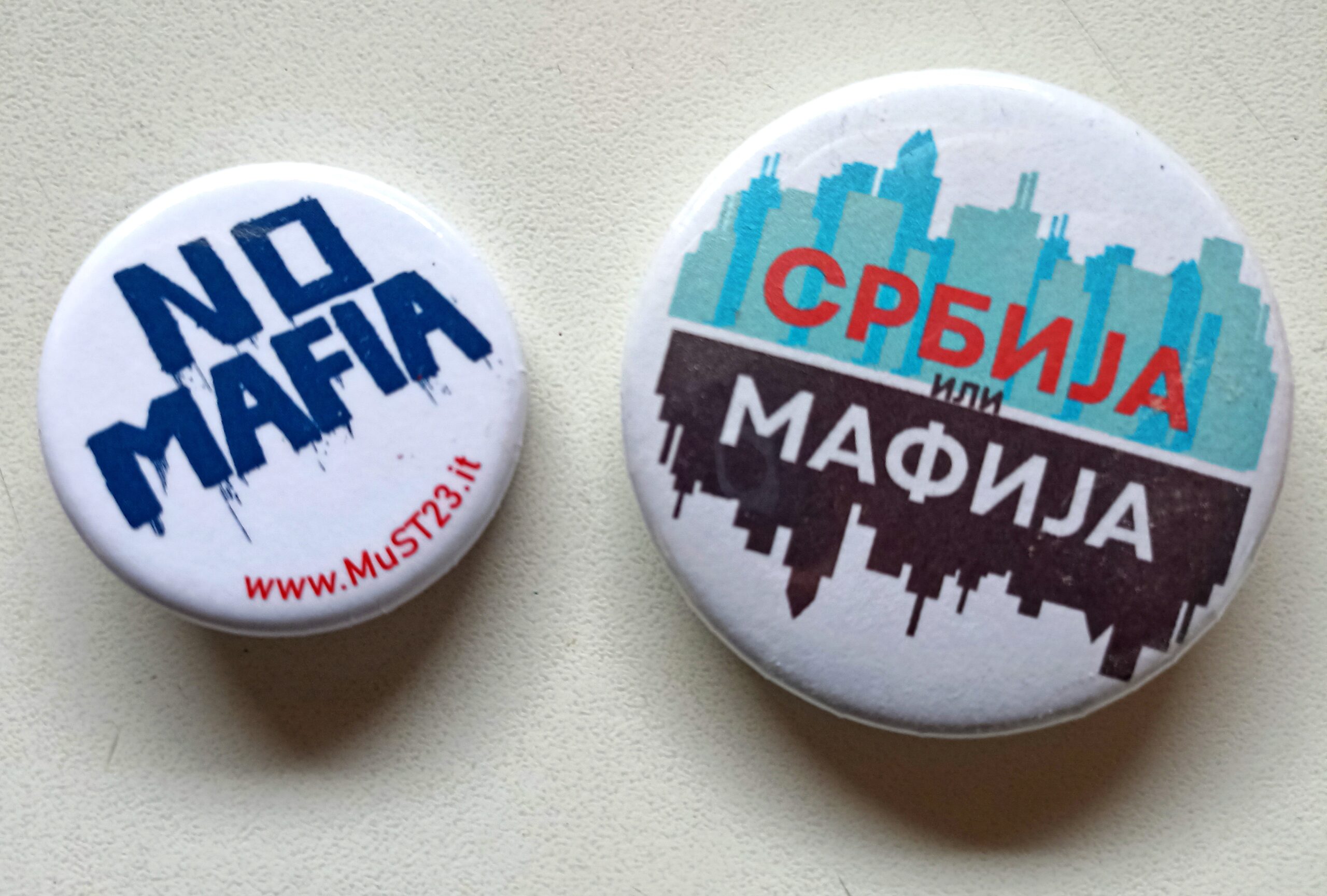
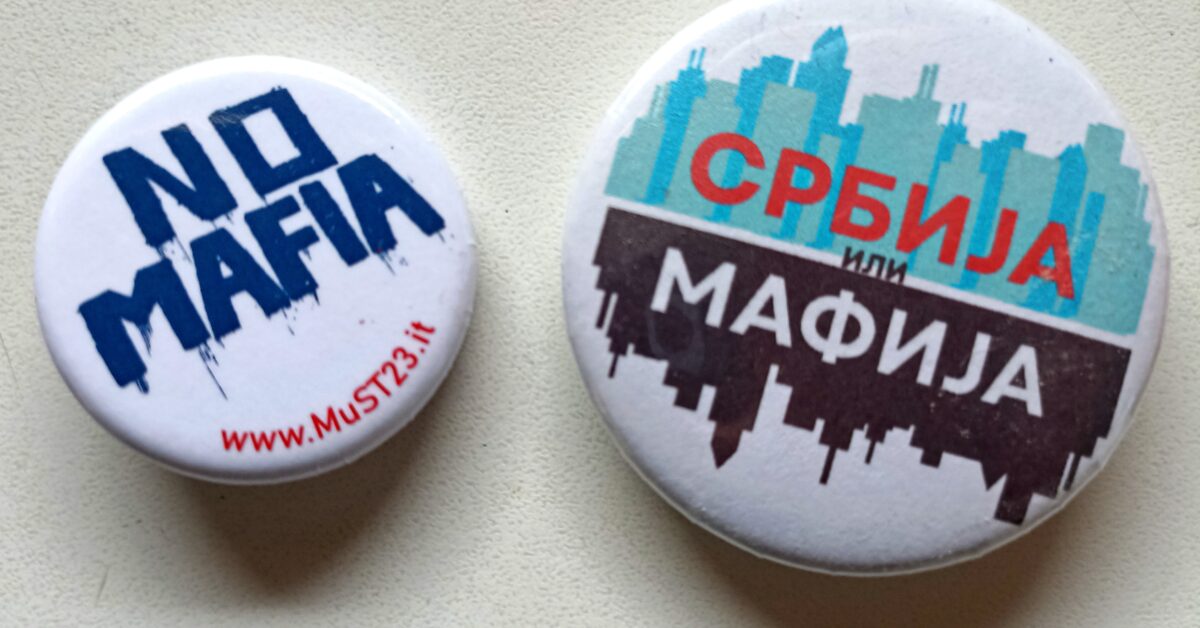
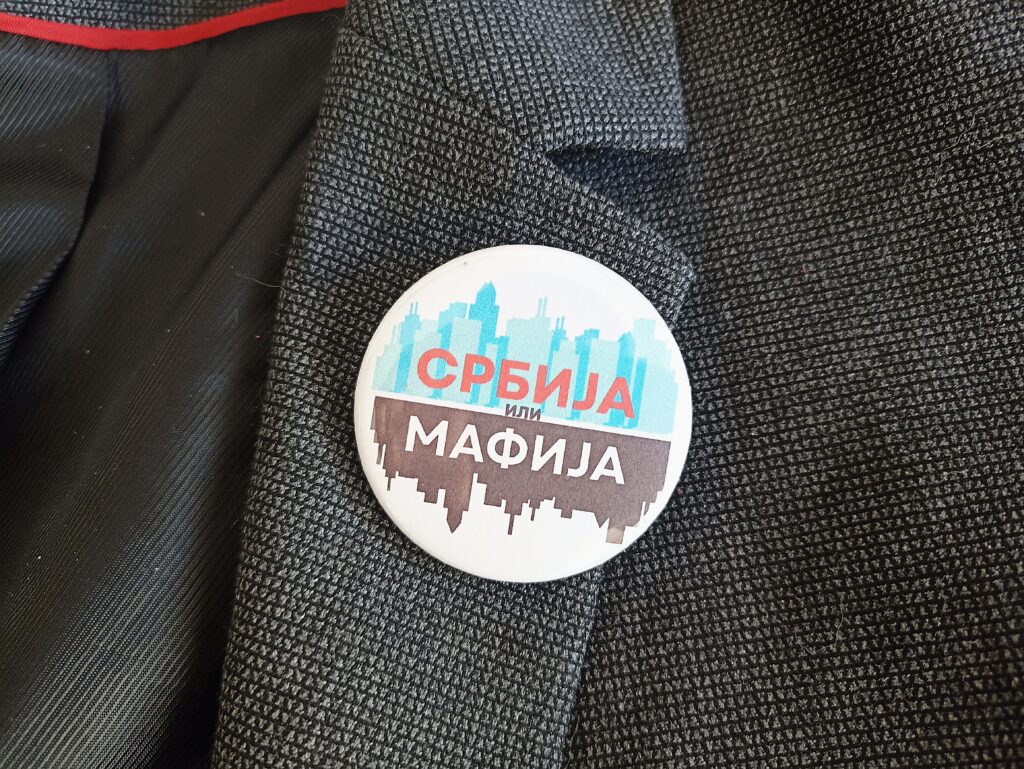
“No Mafia” and “Srbija ili mafija” (“Serbia or Mafia“) are two slogans that have a real effect in the local settings where they appear. The first belongs to today’s broad social and civic struggle against the mafia in the Italian context, while the second appears in Serbia as a widely accepted slogan of the student movement and the current electoral mobilization. But does the word “mafia” carry the same meaning in these two settings, and does it refer to the same political and social phenomena? In other words, does what the word “mafia” designates determine the possibilities and limits of the struggle against it, given the organizational forms people practice? For people from these two settings, it is a word that (still) resonates among them and produces tactics of struggle against the mafia that are at once similar and entirely different – in fact, above all, singular.
Mafia and/or Organized Crime
That every mafia is organized crime, but not every organized crime is a mafia, can be seen as an interpretation and summary of several theses we have encountered, which speak to the specificities of these phenomena in Western and Eastern Europe. First, there is the analysis of the Italian sociologist Federico Varese, who holds that “protection” is the defining function of the mafia, which he uses as a criterion to distinguish the mafia – a group that attempts to control a given territory or market and offers its own form of “governance” as much as sheer violence – from ordinary crime. For him, the mafia imposes order by its own rules where the state fails to do so reliably.
On the other hand, in his famous book McMafia, journalist Misha Glenny, studying the former Soviet Union and some Eastern European countries, argues that organized crime did not emerge on the margins of society, where the state is absent, but arose at the very heart of the state. According to him, former operatives of the secret services and the state security apparatus became the patrons of organized crime, who, through the “krysha,” or protective “roof,” offered physical security, debt collection, protection from other criminal groups, and dispute resolution, in exchange for payment.
In the West, it is the mafia that offers protection to organized crime, extorting money in exchange for security, while in the East it is the state that provides protection to organized crime.
Although this practice resembles mafia-style extortion or “racket,” the fundamental difference lies in its grounding within the state apparatus itself, whereby the line between lawful business, political power, and pure criminal activity ceased to exist. Moreover, at the end of the wars in Yugoslavia, criminals and dogs of war were even allowed to form new states for the sake of peace, but not to achieve justice or establish accountability, as Mary Kaldor argues in her analysis of “new wars.”
What matters for our case is that there is an inversion between mafia and organized crime: in the West, it is the mafia that offers protection to organized crime, extorting money in exchange for security, while in the East it is the state that provides protection to organized crime. From this inversion it might follow that the mafia does not actually exist in countries like Serbia, as my colleague Zoran Gajić argues, who examines the relationship between mafia and organized crime in his Criminal Hypothesis. However, even if we are dealing with its colloquial meaning as used by people in Serbia today (“Srbija ili mafija”), it still matters to them and has a powerful effect on their mobilization.
The Anti-mafia 2.0 Movement
The evolution of the struggle against the mafia in a country like Italy has moved from an institutional, political, and police apparatus toward a broader social, cultural, and economic front. While in the early stages of this struggle the main levers of resistance lay in the hands of specialized prosecutors’ offices and courts, over time it became clear that repression alone could not fundamentally change structures that persist thanks to economic dependency and pressure on territories and local populations. For this reason, the center of gravity shifted toward civil society.
A turning point in the fight against the mafia in Italy was the assassination of prosecuting judges Giovanni Falcone and Paolo Borsellino in the early 1990s, following the largest mafia trial to date, known as the maxi-trial. These killings, an act of mafia retaliation, are today perceived in Italy as one of the greatest national tragedies, and the experience of the anti-mafia struggle of that time has been thoroughly historicized.
After that now-historic event, what emerged – and what still exists today – is a broad, informal network of civic, economic, and media initiatives operating under the name Anti-mafia 2.0 or Antimafia Sociale (Social Antimafia). The movement operates directly within local communities to cut off the mafia’s financial flows and prevent criminal clans from exerting influence over territories and people.
“The effective antimafia of the new century is antimafia 2.0, one capable of engaging citizens from the bottom up.”
The term “Antimafia 2.0” has no single, fixed meaning in Italy. If we were to ask about its legal grounding, that too is not unambiguous, since it is “codified” in a programmatic and political document of the Italian Ministry of Justice known as the Carta di Milano. The second-to-last of its ten theses reads: “The effective antimafia of the new century is antimafia 2.0, one capable of engaging citizens from the bottom up, with the full integration of informational resources.” This document was produced during 2016–2017, even though the informal Antimafia 2.0 movement has existed for more than two decades, within which organizations often emerged precisely as a response to institutional failure in the fight against the mafia.
Still, one of the key pillars of the citizens’ struggle against the mafia rests on a concrete, enacted law. This is the Law on the Social Use of Seized Assets, or Law 109 of 1996, which allows property definitively confiscated from the mafia to be handed over to the civil sector for management and use. It links two phases of the fight against the mafia, given that its predecessor was Law 646/1982, known as the Rognoni–La Torre Law, after lawmakers Virginio Rognoni and Pio La Torre – the latter killed by the mafia that same year – which introduced the criminal offense of mafia-type association and the mandatory confiscation of property, proceeds, and assets linked to mafia-related crimes. In this way, the judicial mechanisms for seizing mafia assets were supplemented by the social and economic repurposing of resources.
Through this model of social repurposing of seized assets, villas, farmland, and business premises taken from criminal clans are handed over to social cooperatives and citizens’ associations for management. Land in Sicily or Calabria today produces organic food and guarantees business conducted without paying protection money to the mafia. One of the oldest examples of this model is the umbrella network Libera, founded in 1995 by the priest Luigi Ciotti. The network brings together more than 1,600 local associations, schools, and unions, and its best-known project is the Libera Terra. This structure manages thousands of hectares of confiscated agricultural land in Campania, Puglia, Calabria, and Sicily. On the former estates of mafia bosses, social cooperatives have been established that employ local residents and marginalized groups, breaking the mafia’s monopoly on employment.
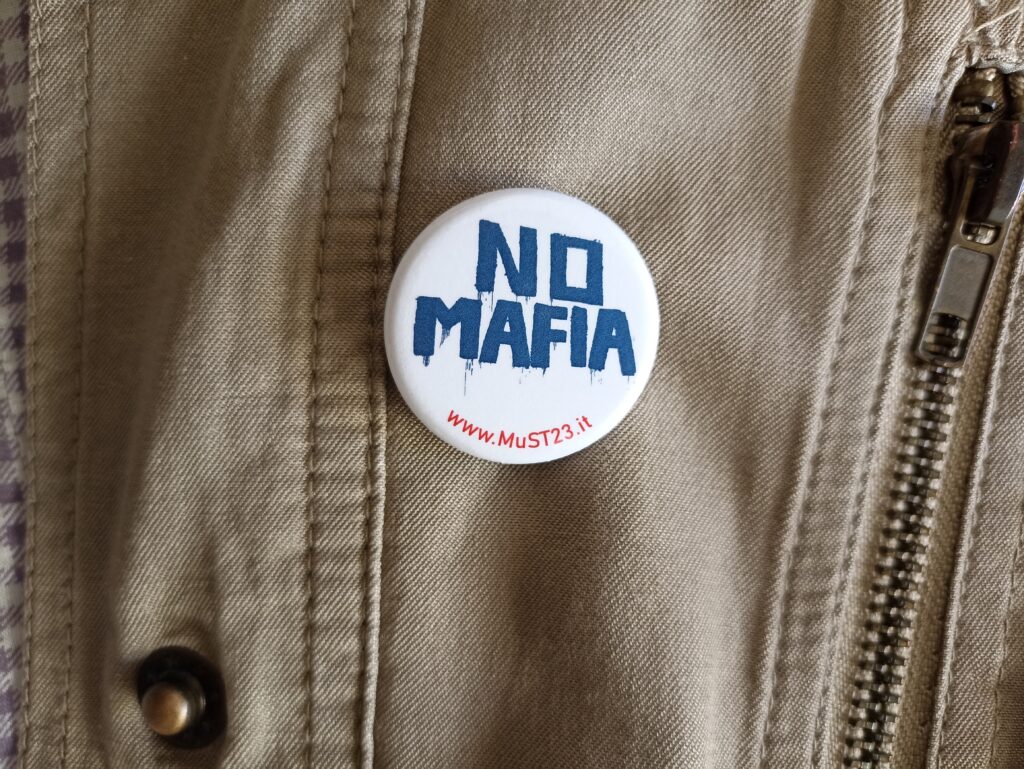
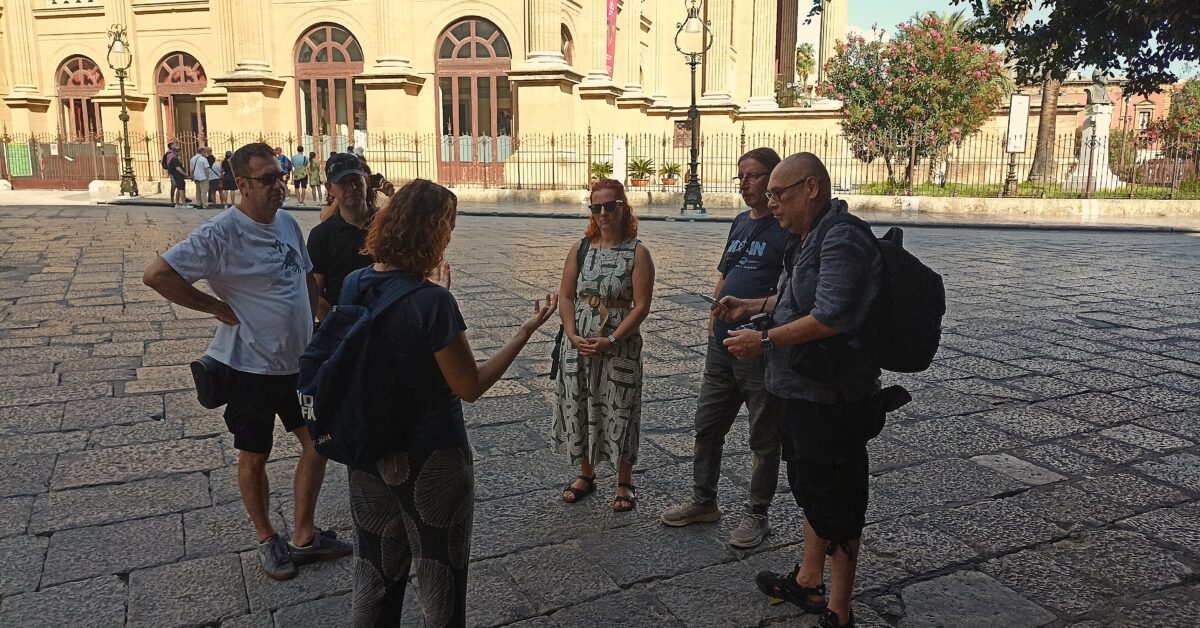
Alongside this, initiatives such as the Addiopizzo network in Palermo have emerged, which we had the opportunity to visit and write about. Such initiatives create a functioning economic ecosystem of critical consumption (consumo critico), in which thousands of consumers consciously direct their money exclusively to merchants and craftspeople who have publicly refused mafia extortion. In this way, mafia racketeering is countered through an economic boycott and the creation of a safe zone for honest business and employment. In addition, there are many other organizations, such as FAI — Federazione delle Associazioni Antiracket Italiane (Federation of Italian Antiracket Associations) from Naples, which brings together entrepreneurs who have collectively refused to pay protection money and organized legal and financial protection for all merchants who report extortion.
The Anti-mafia 2.0 movement gains a significant point of articulation in the field of investigative journalism. Aware that capital originating from illegal trade and corruption flows into legal channels through real estate and green energy, journalists today function as independent observatories of financial flows. These networks expose the complex links between the mafia, criminal organizations, business entities, and political structures. The movement thereby moves beyond Italy’s local framework and operates transnationally, treating contemporary organized crime as a global entrepreneurial mechanism. In this domain, the movement includes specialized investigative platforms such as Antimafia Duemila, a portal operating since 2000, whose journalists track public procurement, company registries, and court proceedings to expose the infiltration of capital into the construction sector, waste management, renewable energy, and European Union funds.
Besides formal associations, cultural centers created in memory of victims also play an important role, such as Centro Impastato in Palermo, dedicated to the activist Peppino Impastato, killed in 1978, about whom we have also written. This center creates educational materials and programs aimed at schools to counter the mafia’s influence on young people.
The new generation of anti-mafia fighters consists of citizens, investigative journalists, entrepreneurs, and digital activists who strip the mafia of its economic and social influence in local communities.
Thus, as a response to both the territorial presence and the transformation of the mafia, or rather mafias, a social, cultural, economic, and civic movement has grown, often identified by the name Antimafia 2.0, pointing precisely to a second, new phase in the fight against the mafia. Its starting premise challenges the traditional approach – the new generation of anti-mafia fighters consists of citizens, investigative journalists, entrepreneurs, and digital activists who strip the mafia of its economic and social influence in local communities.
However, the question arises whether such a movement, despite its transformative power, also represents a certain culturalization of politics – a shift in the center of gravity of the struggle away from the structural and institutional causes of the mafia phenomenon, such as, say, the question of the mafia’s collusion with political elites, toward the field of individual choice, consumer ethics, and civic culture. Perhaps the meaning of the programmatic and legally non-binding document Carta di Milano would support that claim – that the structural mechanisms enabling the reproduction of mafia power, such as corruption in public procurement and collusion with local and national authorities, may remain outside its focus.
On the other hand, the many organizational forms, associations, and social and other cooperatives operating within this informal movement do not claim to be political actors, but rather social ones (Antimafia Sociale). What is certain is that there is no explicit resistance from the state toward civil society – or at least not yet, not entirely explicitly – which has room to organize itself autonomously in a domain that, in the end, has its own clear social and cultural effects.
Serbia or Organized Crime
Perhaps the thesis about people’s response to the mafia and organized crime, in terms of the “origin” of these phenomena in relation to the state, would be too much of a stretch. That would mean that Antimafia 2.0 is a social movement because the mafia arose outside the state. And in Serbia’s case, that the people’s struggle against the mafia, or rather organized crime, takes place in the very space of its own origin – the state itself. Thus, in Serbia, the site of people’s intervention is not the terrain of society, but the state and government themselves. And because of this, as the basic and only form of struggle, we have electoral mobilization and the overthrow of the regime through voting.
At least in this second case, in the case of Serbia, that thesis could be somewhat less of a stretch. The populist narrative of those in power about civil society and its organizations as foreign agents of the West’s soft power has, over time, successfully spread to citizens, who, despite their permanent electoral mobilization, consider themselves apolitical and refuse any form of organization, whether of civil society or of a political party. This is why the prevailing impression is that in Serbia everything originates in, and ends in, the state. Weakness, active suppression, and distrust toward citizens’ associations are part of the surrounding atmosphere of the omnipotence of the state and those in power.
In today’s struggles of the student movement, the current government has been equated with the mafia, as evidenced by “Serbia or Mafia”, both as a slogan and as the title of a section of the Student List’s program aimed at rooting out corruption from state institutions. A resemblance between state-organized crime and the mafia could perhaps be drawn in the kind of extortion and blackmail that those in power exercise over people to whom they give jobs, through an absolute monopoly on employment, which is not pure racketeering, since those who “pay” do so by casting their vote for the ruling party.
For our conditions, the Student List’s program introduces innovations in the fight against organized crime, such as: freeing the courts and the prosecution, including the formation of a special prosecutorial police; a law on the origin and confiscation of illegally acquired assets and the lustration of public officials; full transparency of public procurement; and freeing the media, above all, public broadcasting.
But one should also look at the innovations within the one thing that is actually underway: an electoral mobilization that is out of the ordinary, and which we call a people’s or popular mobilization.
It should also be said that Serbia has no long history of fighting the mafia or organized crime, and when such a fight did occur, it came exclusively from within the state. The collapse of socialist Yugoslavia took place through a civil war in which the boundaries between the state apparatus, the security services, and crime were erased. And after the political changes of 2000, an attempt to establish legal mechanisms to settle accounts with such a structure ended with the assassination of then–Prime Minister Zoran Đinđić, ordered by that very same criminal-political structure.
Besides the trials through which a specific criminal clan was dismantled, another significant reckoning with crime was the arrest and trial of crime boss Darko Šarić for injecting dirty money from cocaine sales into legal channels through the privatization of agricultural combines, hotels, and local companies across Serbia. Because of political pressure on the judiciary and the infiltration of crime into state structures, the center of gravity in the fight against organized crime in Serbia has largely been taken up by investigative journalism networks, such as KRIK and BIRN.
But one should also look at the innovations within the one thing that is actually underway: an electoral mobilization that is out of the ordinary, and which we call a people’s or popular mobilization, one far more effective than any party-based one. After the university blockades, students focused on forming the student list and a network of student bodies meant to prepare their movement for the elections, and citizens for voting and election monitoring. And in this they are not alone, as they are supported by a multitude of citizens organized into informal neighborhood citizens’ assemblies, of which there are hundreds across Serbia.
As a longtime collaborator of ours said, speaking of the politics they practice, “it starts from the individual and their immediate decision to react to injustice. Its space is not the parliament building or the government, but solidarity and the joint action of people on the street, in the neighborhood, at the assembly.” Though still electoral, but no longer party politics, their struggle rests largely on solidarity, and their actions often exceed the electoral apparatus: they organize humanitarian aid for the poor and the sick whom the state fails to provide treatment for, support those who have been arrested and beaten, support teachers and schools that the authorities want to shut down, and provide financial support to professors and many others who were dismissed for supporting the student movement.
In Serbia, right now no one is alone, but at the same time the question arises of the capacity for these spontaneous and unorganized forms of solidarity among people to be sustained – something we might call a 2.0 phase.
A concrete example of this form of spontaneous solidarity occurred each of the three times the Belgrade flower shop “Imela” was set on fire because its owner supported the student and civic struggle against the regime. The third attack on the flower shop was extreme, as masked attackers completely destroyed and burned it down. The enormous material damage this caused was the reason citizens decided, in a show of solidarity, to raise funds and contribute their own labor to help renovate the premises, enabling the owners to restore the shop and resume work.
Such forms of solidarity occur under the slogan “niko nije sam” (“no one is alone“), which is almost identical to the slogan seen in Italy, among the organizations that make up the Antimafia 2.0 movement – “Non siete più soli” (“You are no longer alone”). There are many similarities between the two settings in which an almost identical slogan appears, but also many differences.
The wealth and development of civil society in Italy allow the struggle against the mafia’s influence to continue uninterrupted, for decades, as a variable but constant mobilization of people in local communities. In Serbia, right now no one is alone, but at the same time the question arises of the capacity for these spontaneous and unorganized forms of solidarity among people to be sustained – something we might call a 2.0 phase, that is, one that is not limited to the results of the elections. Changing the way the struggle is waged would mean changing the entire collective imaginary people hold about the mafia, or rather, about organized crime, but also persistence and inventiveness in their own forms of organizing.
—
The text was produced as part of the “Study Visit and Practical Workshops” activity of the ERASMUS+ small-scale partnership in adult education project “Change Comes from Community Media,” jointly implemented by the Group for Conceptual Politics from Serbia and Italia che Cambia from Italy.